

Fiber optic production filtration
2026-05-31Traffic:
Detailed Explanation of Filtration Technology in Fiber Optic Production
Filtration in fiber optic production is not a single step but a critical quality control measure that spans the entire value chain, from raw material preparation, preform manufacturing, fiber drawing, to final testing. Its core purpose is to remove particulate impurities, moisture, and oxygen to ensure the fiber has extremely low optical loss, high mechanical strength, and long-term reliability.
The following provides a professional interpretation from three dimensions: gas purification, liquid/chemical reagent filtration, and filtration alternatives in online monitoring.
1. Ultra-Pure Gas Filtration and Purification
In multiple stages of fiber optic manufacturing, particularly during preform (Preform) manufacturing and fiber drawing, high-purity inert or reactive gases are required. Any residual particulates, moisture, or oxygen can lead to fiber defects and increased optical signal attenuation.
1.1 Key Application Scenarios
Preform Manufacturing (MCVD/OVD/VAD Processes): During Modified Chemical Vapor Deposition (MCVD), Outside Vapor Deposition (OVD), or Axial Vapor Deposition (VAD), high-purity gases (such as silicon tetrachloride SiCl₄, germanium tetrachloride GeCl₄) are introduced into the reaction chamber. These gases must undergo strict filtration to prevent solid particle contamination of the glass matrix.
Fiber Drawing (Fiber Drawing): In the high-temperature drawing tower, the fiber core and cladding form at elevated temperatures. To prevent reactions between quartz glass and atmospheric oxygen/moisture at high temperatures, or to prevent oxidation of metal components, high-purity nitrogen, helium, or hydrogen is typically used as a protective atmosphere.
Helium Recovery and Filtration: Due to the scarcity and high cost of helium, modern factories often employ helium recovery systems. Recovered helium must pass through special filtration devices to remove particulates, moisture, and oxygen before being reused in the drawing process.
Mixed Gas Filtration: To reduce costs, helium may be mixed with argon (e.g., 80% helium + 20% argon). Such mixed gases also require precise filtration and flow control to ensure drawing process stability.
1.2 Filtration Technology Requirements
Ultra-High Purity (UHP): Gas filters must be capable of removing sub-micron and even nanometer-level particles.
Low Dead Volume Design: To prevent gas stagnation within the filter, avoiding cross-contamination or pressure fluctuations that could affect process stability.
Material Compatibility: Filter media must withstand corrosive gases (e.g., chlorides) and high-temperature environments.
2. Liquid and Chemical Reagent Filtration
In addition to gases, cleaning solutions, coating materials (Coating), and cooling water used in fiber optic production also require strict filtration.
2.1 Wafer Cleaning and Filtration
While \"wafer cleaning\" is primarily associated with the semiconductor industry, the manufacturing of passive components such as fiber optic connectors and couplers also involves cleaning precision optical elements.
Ultrapure Water (UPW): Used to rinse fiber preforms or component surfaces, it must undergo multi-stage membrane filtration and ion exchange to remove all ions and particles.
Organic Solvent Filtration: Organic solvents used to remove carbon layers or old coatings from fiber surfaces must undergo terminal filtration.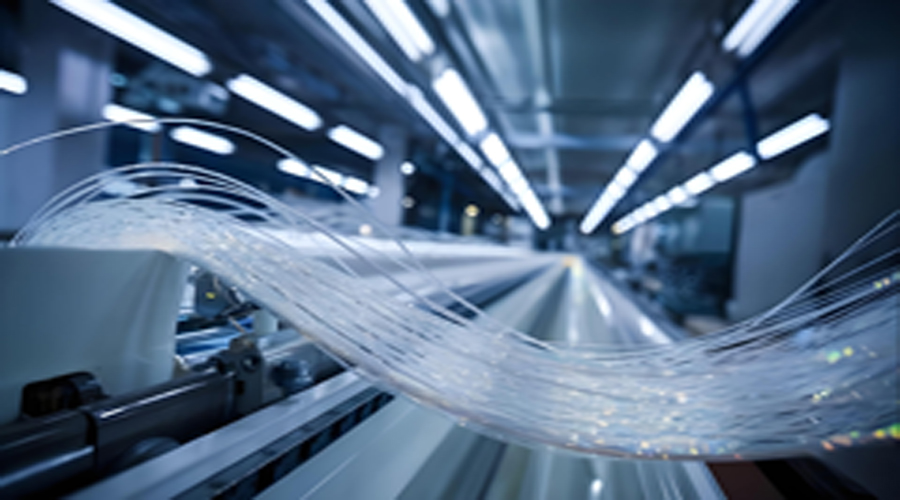
Filtration in fiber optic production is not a single step but a critical quality control measure that spans the entire value chain, from raw material preparation, preform manufacturing, fiber drawing, to final testing. Its core purpose is to remove particulate impurities, moisture, and oxygen to ensure the fiber has extremely low optical loss, high mechanical strength, and long-term reliability.
The following provides a professional interpretation from three dimensions: gas purification, liquid/chemical reagent filtration, and filtration alternatives in online monitoring.
1. Ultra-Pure Gas Filtration and Purification
In multiple stages of fiber optic manufacturing, particularly during preform (Preform) manufacturing and fiber drawing, high-purity inert or reactive gases are required. Any residual particulates, moisture, or oxygen can lead to fiber defects and increased optical signal attenuation.
1.1 Key Application Scenarios
Preform Manufacturing (MCVD/OVD/VAD Processes): During Modified Chemical Vapor Deposition (MCVD), Outside Vapor Deposition (OVD), or Axial Vapor Deposition (VAD), high-purity gases (such as silicon tetrachloride SiCl₄, germanium tetrachloride GeCl₄) are introduced into the reaction chamber. These gases must undergo strict filtration to prevent solid particle contamination of the glass matrix.
Fiber Drawing (Fiber Drawing): In the high-temperature drawing tower, the fiber core and cladding form at elevated temperatures. To prevent reactions between quartz glass and atmospheric oxygen/moisture at high temperatures, or to prevent oxidation of metal components, high-purity nitrogen, helium, or hydrogen is typically used as a protective atmosphere.
Helium Recovery and Filtration: Due to the scarcity and high cost of helium, modern factories often employ helium recovery systems. Recovered helium must pass through special filtration devices to remove particulates, moisture, and oxygen before being reused in the drawing process.
Mixed Gas Filtration: To reduce costs, helium may be mixed with argon (e.g., 80% helium + 20% argon). Such mixed gases also require precise filtration and flow control to ensure drawing process stability.
1.2 Filtration Technology Requirements
Ultra-High Purity (UHP): Gas filters must be capable of removing sub-micron and even nanometer-level particles.
Low Dead Volume Design: To prevent gas stagnation within the filter, avoiding cross-contamination or pressure fluctuations that could affect process stability.
Material Compatibility: Filter media must withstand corrosive gases (e.g., chlorides) and high-temperature environments.
2. Liquid and Chemical Reagent Filtration
In addition to gases, cleaning solutions, coating materials (Coating), and cooling water used in fiber optic production also require strict filtration.
2.1 Wafer Cleaning and Filtration
While \"wafer cleaning\" is primarily associated with the semiconductor industry, the manufacturing of passive components such as fiber optic connectors and couplers also involves cleaning precision optical elements.
Ultrapure Water (UPW): Used to rinse fiber preforms or component surfaces, it must undergo multi-stage membrane filtration and ion exchange to remove all ions and particles.
Organic Solvent Filtration: Organic solvents used to remove carbon layers or old coatings from fiber surfaces must undergo terminal filtration.